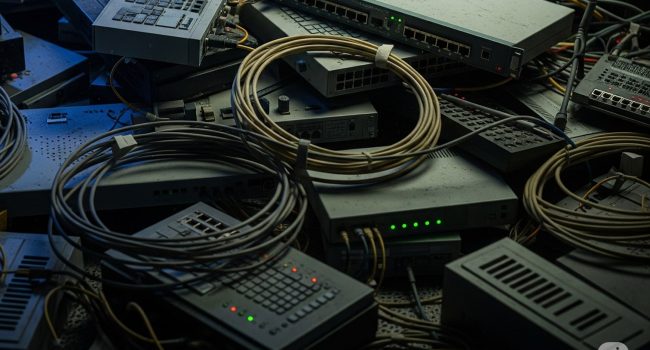
Across many organizations, idle network equipment ends up in storage rooms, server rooms, branch offices, and forgotten cabinets. Teams remove the equipment from active use, but they rarely manage it as retired inventory.
That creates a quiet financial loss.
Routers, switches, access points, firewalls, wireless radios, power supplies, CPEs, and telecom spares often retain usable value long after teams remove them from production. Yet many organizations allow these assets to sit idle until they lose market value, become obsolete, suffer damage, lose documentation, or become difficult to resell.
The result is simple: the organization loses recoverable value, increases storage costs, creates compliance exposure, and eventually treats reusable equipment as waste.
For organizations that manage large ICT environments, idle network equipment should not sit unnoticed. It should enter a structured asset recovery process.
Why Idle Network Equipment Becomes a Financial Loss
Network equipment usually becomes idle after upgrades, infrastructure refreshes, site closures, migration projects, ISP changes, or standardization exercises. In many cases, the equipment still works. The organization may only have replaced it because it moved to a newer platform, changed vendors, increased capacity, or consolidated its infrastructure.
The problem begins when no one defines what happens next.
Once teams remove equipment from service, the organization often loses visibility. The asset register may not reflect the change. Accessories may move separately from the main unit. Teams may fail to record serial numbers. Devices may retain configuration data. Over time, the commercial value drops while the operational risk increases.
A switch stored for six months may still hold resale value. The same switch stored for three years without power adapters, modules, licenses, condition notes, or proof of ownership becomes much harder to sell.
Idle equipment does not become worthless immediately. It loses value through neglect.
The Hidden Costs Most Organizations Miss
Depreciation creates the first cost. Network and telecom equipment loses market value as newer models enter the market, firmware support changes, and buyer demand shifts. The longer equipment sits idle, the harder it becomes to remarket at a reasonable price.
Storage creates the second cost. Unused ICT assets occupy physical space that could serve a better purpose. Distributed organizations multiply this cost across branches, warehouses, data rooms, and technical stores.
Poor inventory control creates the third cost. When organizations do not document idle equipment properly, they lose track of what they own. This can lead to unnecessary purchases, duplicate procurement, or emergency buying when usable equipment already sits in storage.
Data and configuration risk create the fourth cost. Network equipment may retain IP addresses, VPN settings, credentials, routing information, customer records, logs, or configuration files. If these assets leave the organization without proper sanitization, the risk becomes both financial and regulatory.
Disposal risk creates the fifth cost. When teams eventually classify equipment as “old,” they may treat it as ordinary e-waste instead of assessing it for reuse, resale, parts recovery, or responsible recycling. That destroys value and weakens sustainability outcomes.
What Kind of Equipment Can Still Hold Value?
Many organizations underestimate the resale and reuse potential of enterprise and telecom-grade equipment. Value may still exist in network switches, routers, firewalls, wireless access points, point-to-point radios, point-to-multipoint radios, customer premise equipment, optical transceivers, SFP modules, power supplies, PoE injectors, UPS systems, rack accessories, spare boards, modules, and line cards.
Not every item will qualify for resale. Some equipment may have damage, missing accessories, outdated firmware, locked configurations, or weak market demand. However, teams should make that decision through inspection and grading, not assumption.
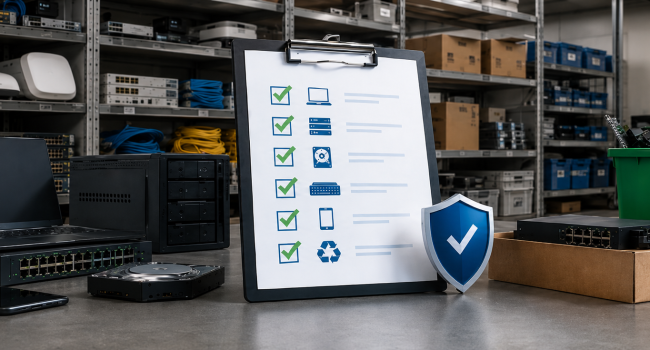
A structured asset recovery process separates equipment into clear pathways. Functional assets can move to remarketing or redeployment. Partially working assets can support spares recovery. Non-functional assets can move to responsible recycling.
How to Recover Value from Idle Network Equipment
Start by identifying what you have. A proper inventory should capture the device type, brand, model, serial number, quantity, physical condition, power status, accessories, modules, and location. This gives your organization a reliable baseline for valuation.
Next, test and grade the equipment. Functional equipment can support resale or redeployment. Partially working equipment may still hold value as spares. Non-functional equipment can support parts recovery or compliant recycling.
Then, sanitize configurations and data. Teams should wipe, reset, or securely clear network equipment before resale, donation, redeployment, or recycling. This includes removing stored credentials, logs, configuration files, management profiles, and sensitive network information.
After that, match each asset to the right recovery channel. Some equipment may suit resale to businesses, ISPs, system integrators, schools, SMEs, or repair networks. Other items may work better for parts harvesting or refurbishment.
Finally, document the process. Your organization should know which assets were collected, how they were handled, what condition they were in, what value they recovered, and how the team disposed of non-recoverable equipment.
This documentation matters to finance teams, audit teams, IT teams, compliance officers, and ESG reporting teams.
Why Speed Matters
The best time to recover value from network equipment comes shortly after teams remove it from service.
At that point, teams can identify the equipment easily. Accessories often remain nearby. Technical context remains fresh. Market demand is usually stronger. Waiting too long reduces your options. Devices become harder to test, harder to match with buyers, and harder to justify as reusable assets.
A delayed decision often turns a recoverable asset into a disposal problem.
Organizations should build asset recovery into the refresh cycle itself. When teams deploy new equipment, the outgoing equipment should immediately enter a recovery workflow. That workflow should cover collection, audit, data sanitization, valuation, remarketing, redeployment, or recycling.
The Compliance and Security Dimension
Idle network equipment does not become risk-free simply because someone unplugged it.
Routers, switches, firewalls, and wireless controllers may retain sensitive information about the organization’s network architecture. This may include VLANs, IP ranges, routing tables, VPN tunnels, firewall rules, SNMP strings, usernames, logs, wireless profiles, and remote management settings.
If an organization sells, donates, repairs, or disposes of these devices without proper sanitization, it may expose internal network information.
That is why asset recovery must sit within a controlled IT Asset Disposition process. The goal is not only to recover value. The goal is to recover value safely.
A defensible process should include chain-of-custody documentation, device-level records, configuration clearing, data sanitization where applicable, and disposal certificates for assets that cannot return to use.
The Sustainability Case for Reuse
Recovering value from idle network equipment also supports sustainability goals.
When organizations reuse, redeploy, refurbish, or resell functional ICT equipment, they extend its useful life. This reduces unnecessary demand for new equipment, delays entry into the waste stream, and supports a more circular technology economy.
For organizations with ESG, CSR, or Extended Producer Responsibility obligations, this matters. Responsible asset recovery provides measurable outcomes. It can show how much equipment returned to use, how much value the organization recovered, and how much material stayed out of disposal.
The strongest IT asset strategies do not separate financial recovery from sustainability. They connect both outcomes.
The RefHub Approach
At RefHub, we treat idle ICT equipment as recoverable value first, not waste by default.
We help organizations identify, assess, sanitize, and recover value from retired network and telecom assets. Our process supports structured collection, asset verification, functional grading, configuration clearing, resale evaluation, repair-for-reuse, and responsible recycling for equipment that cannot return to service.
This gives organizations a clear pathway for managing idle assets while reducing risk, improving compliance, and supporting sustainability reporting.
Whether the equipment sits in a server room, branch office, warehouse, or technical store, the principle remains the same: if it is idle, assess it before it loses value.
Turn Idle Equipment into Responsible Value
Idle network equipment is not just old hardware. It represents tied-up capital, unmanaged risk, and missed sustainability impact.
The organizations that recover the most value act early, document properly, and apply a structured IT Asset Disposition process. They know what they own, understand what they can reuse, and avoid waiting until equipment loses both market value and operational relevance.
Before your next refresh cycle, branch closure, or infrastructure upgrade, take a closer look at what already sits unused.
It may be costing you money.
And with the right recovery process, it may still be worth more than you think.
If routers, switches, access points, radios, or telecom spares are sitting unused in your organization, RefHub can help you assess their condition, recover resale value, clear sensitive configurations, and recycle non-recoverable assets responsibly. Contact us to start with a structured asset recovery assessment.