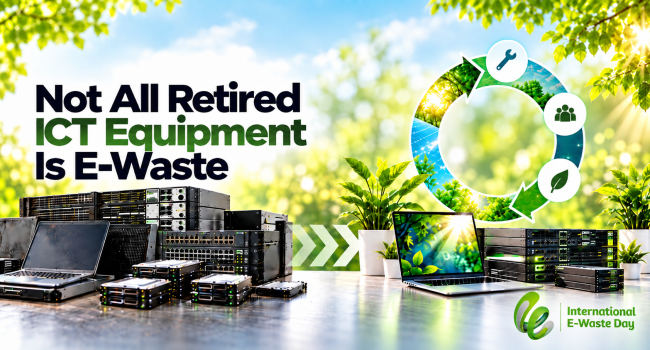
Every year, organisations retire thousands of computers, servers and networking devices as part of routine technology upgrades. Some no longer meet operational requirements, while others leave service during infrastructure migrations or changes in corporate IT policies.
Yet many of these devices are still functional, capable of delivering years of useful service elsewhere.
The problem is that retirement from an organisation is often mistaken for the end of an asset’s useful life.
As we mark International E-Waste Day, it is worth reconsidering how businesses approach ICT asset retirement and whether equipment classified as obsolete genuinely belongs in the recycling stream.
Obsolete Does Not Always Mean Unusable
A business may replace its fleet of laptops after four years to meet new performance requirements or standardise its IT environment. The retired machines may no longer suit that organisation’s needs, but they could still serve another business, educational institution or individual effectively.
The same applies to enterprise networking equipment. An organisation upgrading its network to 10GbE may retire switches that remain perfectly suitable for smaller businesses operating Gigabit Ethernet infrastructure.
In both cases, the equipment has reached the end of its usefulness to one organisation, not necessarily the end of its functional life.
Treating these assets as waste without first assessing their condition overlooks an opportunity to recover economic value and extend the lifespan of resources already invested in their manufacture.
The Business Case for Reuse
ICT equipment represents a substantial capital investment. When organisations retire these assets, the remaining value does not automatically disappear.
Through structured IT Asset Disposition (ITAD), businesses can identify equipment suitable for refurbishment and remarketing, potentially recovering part of their original investment.
This approach also benefits the secondary ICT market, where businesses and individuals can access reliable refurbished equipment at a fraction of the cost of purchasing new hardware.
Beyond the financial benefits, extending the useful life of existing equipment reduces demand for replacement products and helps limit the environmental impact associated with manufacturing new devices.
The most responsible outcome for a retired ICT asset is not necessarily recycling it. Where safe and practical, keeping it in productive use can deliver greater value.
Data Security Cannot Be an Afterthought
One of the main concerns surrounding ICT asset reuse is the security of information that retired devices may still hold.
Computers and servers may retain sensitive business information long after organisations disconnect them from corporate networks. Simply deleting files or formatting storage drives does not necessarily provide adequate assurance that someone cannot recover the underlying data.
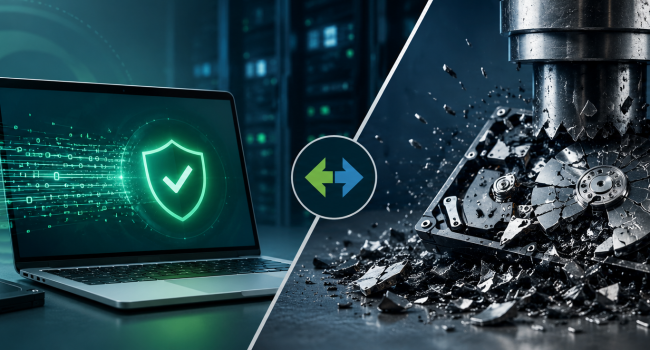
Before releasing equipment for reuse or remarketing, ITAD providers must perform and verify appropriate data sanitisation procedures.
Professional ITAD processes address this requirement through controlled asset handling, secure data erasure or physical destruction where necessary. Documentation records the sanitisation method, results and relevant asset details.
With the right safeguards, organisations can recover value from retired equipment without compromising their data protection obligations.
Recycling Still Has an Essential Role
Not every retired device qualifies for another service life.
Some equipment suffers damage beyond economical repair. Other devices may still function but consume too much energy, present safety concerns or lack the capabilities necessary for practical reuse.
These assets require environmentally responsible end-of-life treatment through appropriate recycling channels.
The distinction lies in making an informed assessment before deciding their fate.
Rather than treating recycling as the default destination for every retired asset, organisations should establish processes that evaluate opportunities for reuse and direct genuinely end-of-life equipment to responsible recycling facilities.
Rethinking ICT Asset Retirement in Kenya
As Kenyan businesses modernise their IT infrastructure, the volume of equipment leaving corporate environments will continue to grow.
This presents an opportunity to strengthen the country’s circular ICT economy by recovering usable equipment, supporting the refurbished technology market and reducing unnecessary electronic waste.
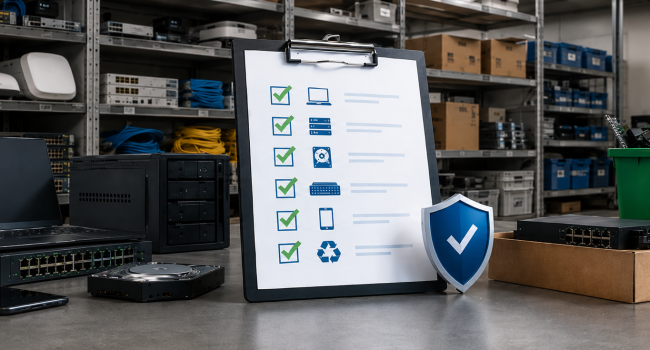
At RefHub Limited, we support this approach through IT Asset Disposition services that prioritise responsible asset recovery. Our work encompasses equipment assessment, repair for reuse, secure data sanitisation, remarketing and environmentally responsible recycling.
We believe organisations should view ICT asset retirement as a managed process with measurable environmental and commercial outcomes, rather than simply a disposal exercise.
International E-Waste Day reminds us that electronic waste is a growing global challenge. Addressing it requires more than improving recycling rates. We must also question how quickly we classify technology as waste in the first place.
An ICT asset can become obsolete to its current owner long before it becomes useless to everyone else.
That distinction is fundamental to building a more sustainable technology ecosystem.